.svg)


Why Retail Media and Merchandising Keep Fighting Each Other & and How to Fix It

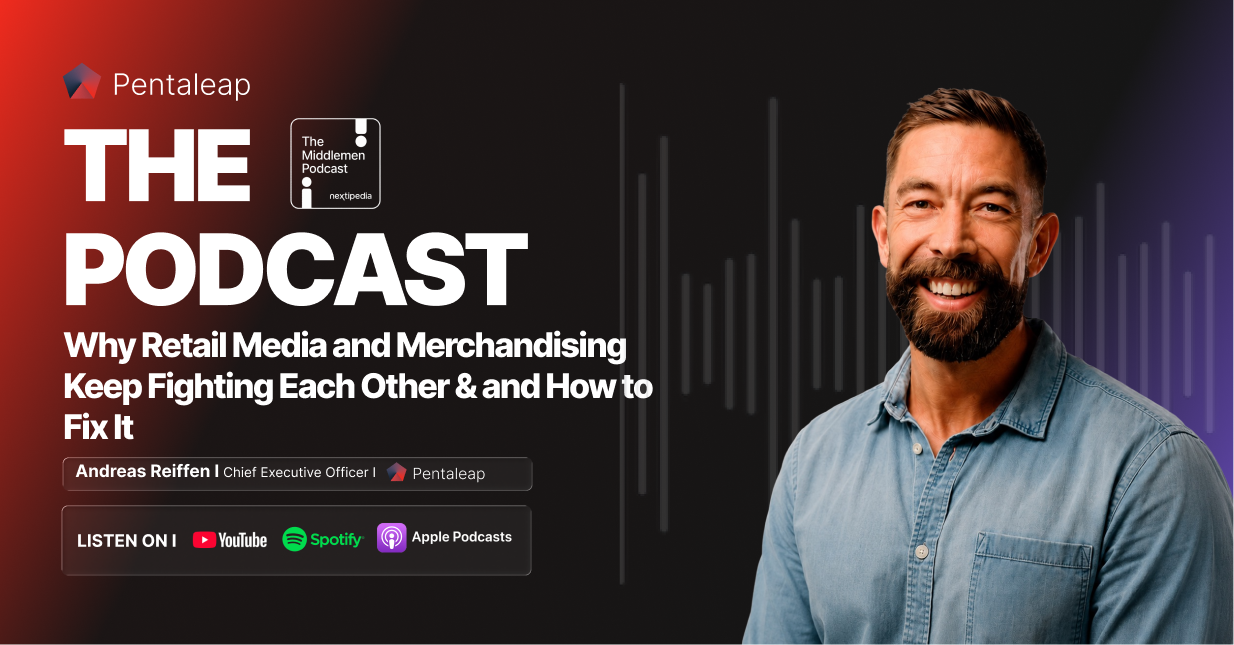
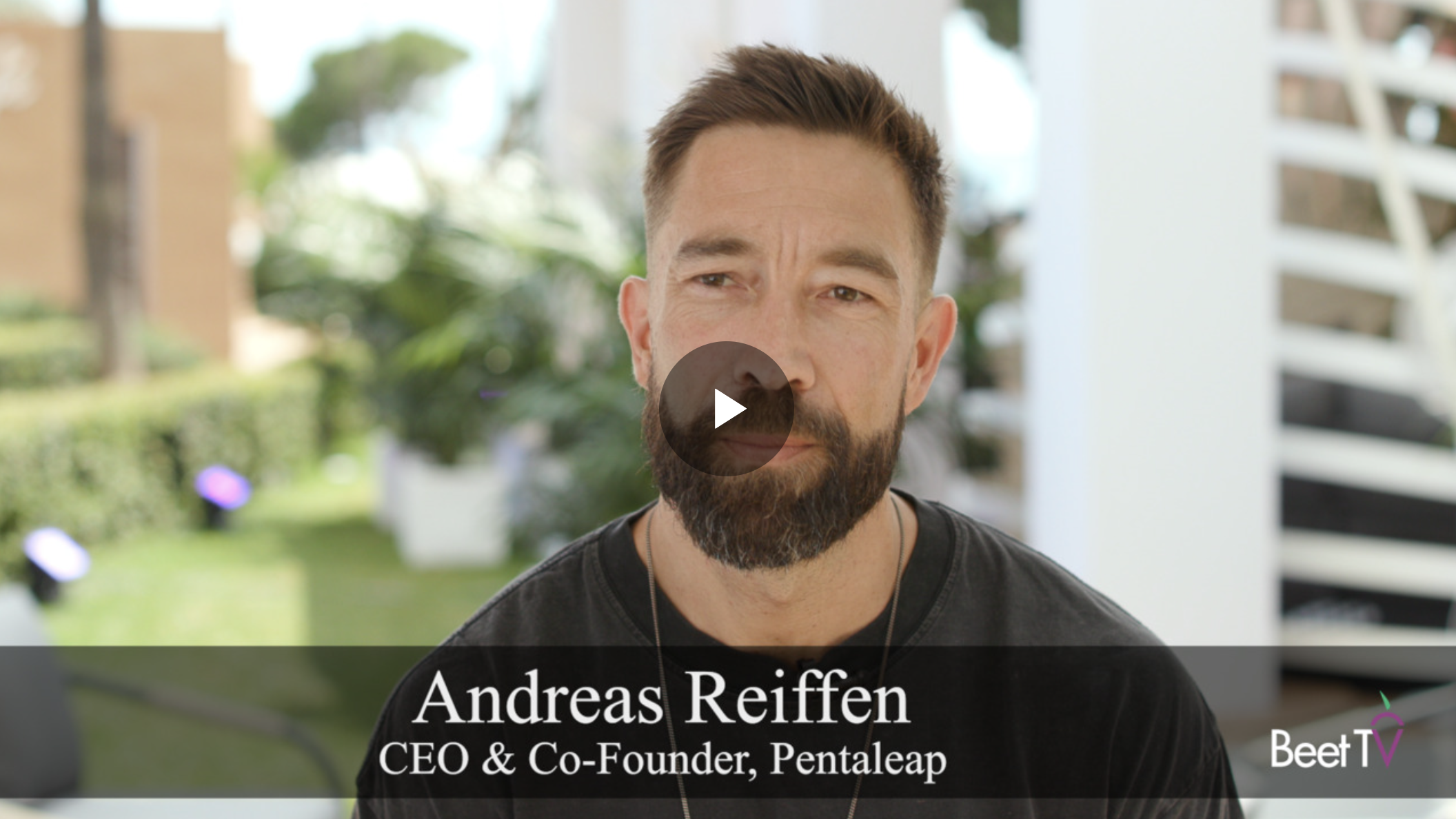
Andreas Reiffen, Founder and CEO of Pentaleap, joined The Middlemen podcast to talk about the structural conflict at the heart of retail media, and how retailers can resolve it. Listen to the full episode on Spotify.
TL;DR: Retail media and merchandising have historically run in separate silos with separate incentives, and that division has been quietly costing retailers money. Andreas Reiffen, founder and CEO of Pentaleap, joined hosts Tom Lavangelo and Scott Messer on The Middlemen podcast to explain why treating sponsored and organic listings as one ranking decision, rather than two competing ones, improves both ad revenue and site conversion at the same time. He also addressed how a phased, front-end-agnostic approach let Home Depot modernize its retail media stack without a disruptive rip-and-replace, and shared his view on how AI agents and conversational search could reshape retail media over time.
Key Takeaways
- Retail media's core flaw is treating paid and organic as separate businesses. Ranking sponsored products by a simplistic relevance score, then bolting them onto a page built by a much smarter search algorithm, creates a mismatch that hurts both ad performance and retail conversion.
- Relevance should drive a single, unified ranking. Pentaleap's approach ranks every product, paid or organic, by a compound margin: retail margin plus ad margin. A highly relevant product with a strong bid can outrank a purely organic one, and vice versa, based on which actually maximizes revenue per page.
- A phased migration beats a rip-and-replace. When Home Depot moved off Microsoft's sunsetting PromoteIQ platform, separating ad-serving decisioning from the brand-facing front end let it migrate gradually instead of forcing a disruptive, all-at-once switch.
- Third-party RTB demand doesn't mean irrelevant ads or leaked traffic. Bringing in outside demand sources, such as Macy's connecting Amazon, only surfaces products the retailer actually sells, and it's rendered through the same unified ranking as everything else.
- Fixing search relevance pays off on the ad side too. Because Pentaleap's ranking inherits signal from the retailer's on-site search platform, improvements to search quality flow through to advertising performance without separate fixes.
- Being front-end and search-platform agnostic is a deliberate strategic choice. It avoids locking retailers into one vendor's ecosystem and lets them swap out ad servers, front ends, or search providers independently.
- AI agents and conversational commerce are a real long-term risk, but not an immediate one. The bigger threat is retailers losing the front end entirely to outside AI platforms; retailers building their own AI agents and plugging Pentaleap's ranking logic into them is the more likely near-term path.
Retail Media's Internal Conflict
Retail media grew up alongside merchandising, but the two have rarely been aligned. Merchandising teams are incentivized to rank products by what will actually sell, maximizing retail margin. Retail media teams are incentivized to sell ad inventory, often using simplistic relevance checks just good enough to avoid obvious mismatches. Run side by side, the two create what Reiffen described as internal horse-trading: retail media teams pushing for more ad inventory, merchandising teams resisting because it drags down conversion.
The result, in the worst cases, is a page that makes some ad money on the front end while quietly undercutting the retail business behind it. Reiffen compared it to a Fifth Avenue storefront filling its window with slow sellers: it generates ad revenue, but it kills the retail business it's supposed to support.
The Fix: One Ranking, Not Two
Reiffen's approach is to eliminate the paid-versus-organic divide altogether. Instead of a search algorithm ranking organic products by expected margin and a separate, simpler system slotting ads into fixed positions, every product on the page is ranked by a single compound margin: retail margin plus ad margin, computed together.
That means a highly relevant, high-bid sponsored product can legitimately outrank an organic listing, and an organic product with strong retail margin can outrank a mediocre ad. The ranking inherits its intelligence from whatever on-site search platform the retailer already uses (Reiffen name-checked Algolia and Google's on-site search as examples of platforms with strong relevance engines), so Pentaleap doesn't need to rebuild relevance logic from scratch. Fixing search quality upstream improves advertising performance downstream, without a separate advertising-side fix.
In testing across dozens of A/B tests, Reiffen said the shift consistently produced two outcomes at once: site conversion rate held steady or improved, even with more ads on the page, and ad revenue rose by a range of 66% to 154%, driven primarily by higher click-through rates from more relevant placements.
How Third-Party Demand Fits In
Bringing outside demand sources into a retailer's own site, via real-time bidding, is newer territory for retail media and tends to raise concerns about relevance and brand safety. Reiffen was direct in separating that concern from how the mechanism actually works in this context: an ad request goes out to multiple demand sources (Criteo, Amazon, and others), each responds with products it has in inventory, and those products are filtered against the retailer's own catalog before anything is shown. A retailer can only ever surface products it actually sells, and the unified ranking treats sponsored products from any demand source the same way it treats a retailer's own organic listings. Invisibly, from a shopper's perspective.
Why Home Depot Didn't Rip and Replace
When Microsoft's PromoteIQ began sunsetting and Home Depot needed a new retail media stack, the instinct was to tear out the whole system and start over - the approach Reiffen watched play out badly when Walmart moved to an in-house solution, overwhelming support lines as thousands of brands were migrated at once.
Reiffen's recommendation instead separated two things that don't need to move together: the ad-serving and decisioning layer, and the brand-facing front end where campaigns are managed. Home Depot kept its ad requests flowing to PromoteIQ initially, layered Pentaleap's RTB-based decisioning on top, and only then gradually migrated brands onto a new front end (Vantage), which also let them run off-site campaigns across Google, Meta, and other channels. The technology swap happened without a disruptive, all-at-once brand migration.
Staying Agnostic by Design
Pentaleap works across ad servers, front ends, and search platforms rather than replacing any of them, and Reiffen described that as a deliberate strategic choice, not a limitation. A vendor that owns the front end and makes money from it has little incentive to point a retailer toward a better front-end option elsewhere. Pentaleap's stance is the opposite: retailers can use its front end as a fallback, but if they want a full-funnel solution, Reiffen said the company will point them toward other vendors.
The same logic applies to search platforms, which Reiffen said get swapped out by clients roughly once a year. Building a retail media stack that depends entirely on one search provider means a painful rebuild every time that provider changes. Staying independent of the underlying search platform lets retailers switch search providers, or ad servers, without disrupting the ranking logic sitting on top.
What AI Agents Mean for Retail Media
Asked whether this model holds up as search becomes more conversational, Reiffen laid out two scenarios. In the first, retailers lose the front end entirely to outside AI platforms, similar to earlier attempts by social platforms and Google to insert a marketplace layer between retailers and shoppers. Retailers pushed back hard against that model because it reduces them to logistics providers. Reiffen doesn't see that happening imminently, since user behavior doesn't shift that fast.
The more immediate scenario, and one Reiffen said Pentaleap is already working on with clients like Home Depot, is retailers building their own AI shopping agents and plugging Pentaleap's ranking intelligence into them. In that model, an AI agent still produces a ranked list of recommendations, and bid value can nudge similarly relevant products up or down that list, the same logic applied to a traditional grid. The risk Reiffen is watching isn't AI adoption itself, but how fast external AI agents might take over the retailer's front end entirely - a shift he called much bigger than a retail media disruption.
FAQ
Why do merchandising and retail media teams end up in conflict? Merchandising is incentivized by retail margin and conversion, while retail media has historically been incentivized by ad inventory sold using simplistic relevance checks. Run as separate systems, gains on one side often come at the other's expense.
How does unifying paid and organic ranking help both sides? By ranking every product on a compound margin (retail margin plus ad margin) rather than two separate systems, retailers have seen ad revenue increase by 66% to 154% in testing while site conversion rate held steady or improved.
Does adding third-party demand (like RTB) risk showing irrelevant or unsafe ads? No. Products are filtered against the retailer's own catalog, so only items the retailer actually sells can appear, and they're ranked through the same unified system as any other listing.
Is a rip-and-replace necessary to modernize a retail media stack? No. Separating ad-serving decisioning from the front end, as Home Depot did, allows a phased migration instead of a disruptive full switch.
Will AI agents and conversational search kill retail media? Not in the near term. The bigger long-term risk is retailers losing the shopping front end entirely to outside AI platforms; in the nearer term, retailers building their own AI agents can plug the same ranking logic into that experience.
This post is based on a conversation between Tom Lavangelo and Scott Messer of The Middlemen podcast and Andreas Reiffen, Founder and CEO of Pentaleap. Listen to the full episode on Spotify.
Stay Ahead with Retail Radar
Subscribe for cutting-edge insight into the latest retail media developments and trends
.png)

.webp)