.svg)


Two Years of Expert Retail Media Conversations

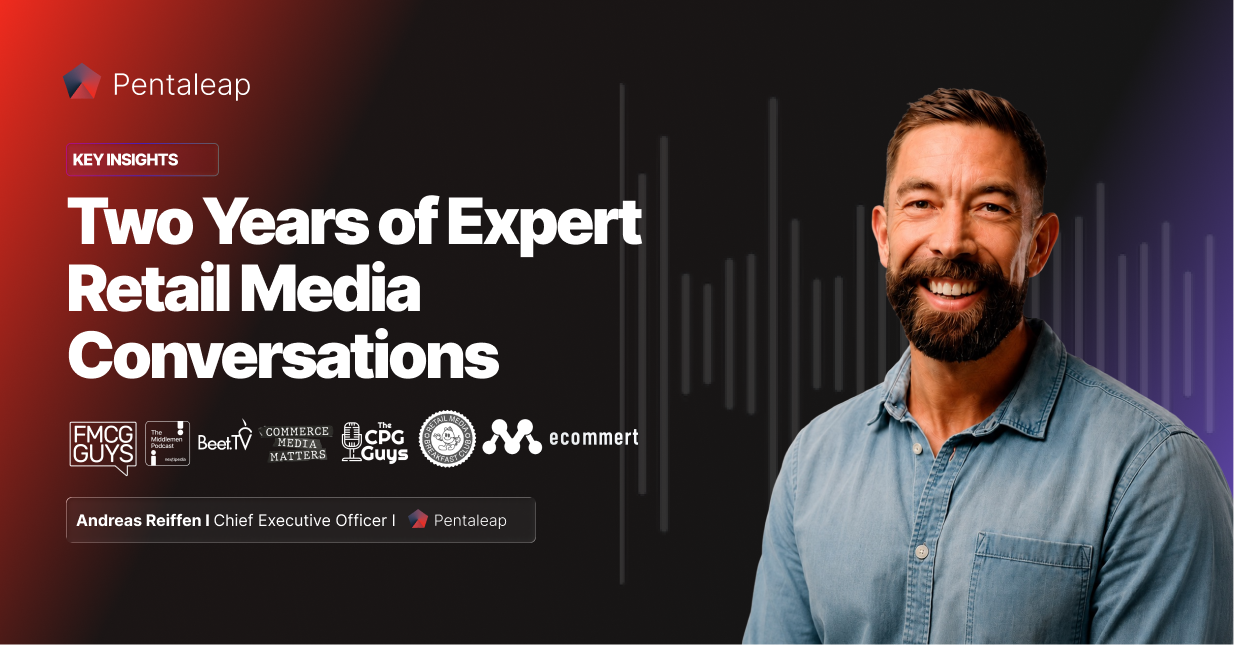
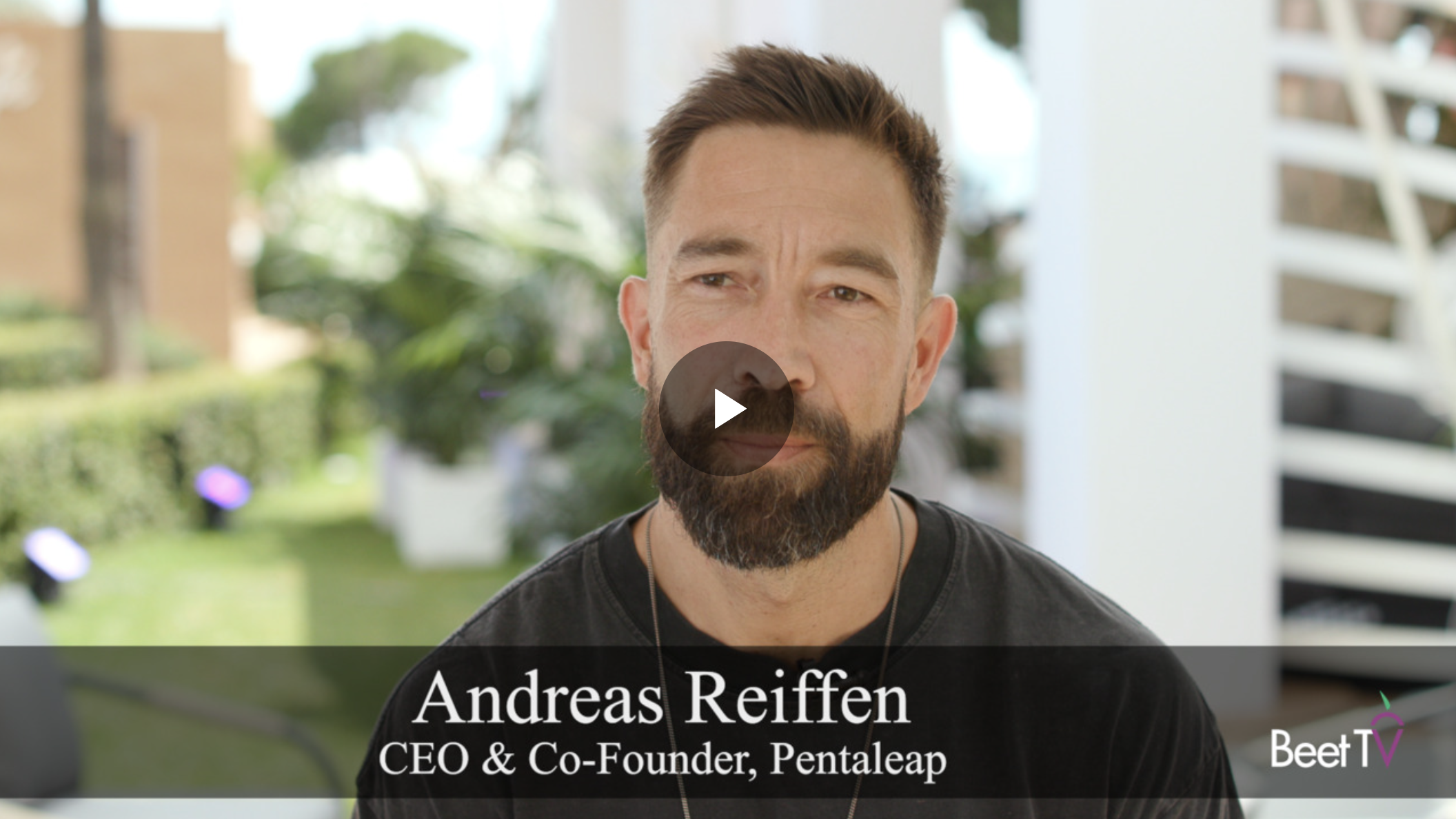
Since 2024, our CEO, Andreas Reiffen, has been a recurring guest on the podcast circuit. The FMCG Guys. The CPG Guys. Commerce Media Matters, once even from a moving van at Cannes. Beet.TV. The Retail Media Breakfast Club. The eCommerce Podcast. The Middlemen.
Ten conversations, many insights, several guest co-panelists from Macy's, Zitcha, and Criteo.
TL;DR: Read individually, each of these conversations is a snapshot of a single moment, a single host, a single angle. Read together, a smaller set of ideas keeps resurfacing, not because Andreas repeats himself, but because the same structural problems keep showing up in every room: paid and organic ranking running as two disconnected systems, fragmentation stacked across multiple layers, RTB as the technical unlock rather than programmatic's old baggage, composable architecture beating the bundle, measurement as an incentive problem rather than a technology gap, and AI agents as a new channel rather than a retail media killer. This post pulls those threads together across all ten conversations, with links to each full episode below.
Retail Media's Core Flaw: Two Systems Fighting Over One Shelf
Nearly every conversation traces back to the same root cause. On The CPG Guys, Macy's VP of Retail Media Michael Krans called it "church and state": organic search optimizing for what the shopper wants, sponsored ranking optimizing for who paid the most, with no communication between the two.
On The Middlemen, Andreas described the internal version of this fight: merchandising teams incentivized to protect retail margin and conversion, retail media teams incentivized to sell ad inventory, running as two separate systems with two separate incentive structures. His fix, described in detail on that show, is a single compound ranking, retail margin plus ad margin, calculated together, rather than a smarter organic algorithm with a simpler ad layer bolted on top. On the eCommerce Podcast, he framed Amazon's advantage in almost identical terms: not size, but the fact that Amazon made sponsored products perform close to as well as organic ones, which is exactly the gap most other retailers haven't closed.
Why Amazon Captures Such an Outsized Share
The numbers come up in multiple conversations, and they're consistent. On The FMCG Guys, Andreas cited Amazon holding roughly 38% of US e-commerce against 75-78% of US retail media spend. On the eCommerce Podcast, he used the same 38%/78% figures to make the same point differently: size gives Amazon negotiating leverage, but the real gap is relevance and openness, Amazon lets multiple third-party demand and campaign tools compete for its inventory rather than routing everything through one exclusive channel.
On Commerce Media Matters, he offered a different gut-check for the same underlying gap: Amazon generates roughly 8% of its GMV in ad revenue, while most other retail media networks sit below 1%, even adjusting for scale.
Fragmentation Isn't One Problem. It's Several, Stacked
This is probably the most consistent theme across all ten conversations, and it shows up differently depending on who's in the room.
With Criteo's Melanie Zimmermann on The FMCG Guys, Andreas broke the overall challenge into four connected pieces: relevant ad serving, fragmentation across networks and within a retailer's own walled garden, ease of spend across channels, and technology cost eating into margin. With Zitcha's Troy Townsend, he was more specific about the "within a walled garden" layer: one team selling on-site, another selling video, another selling email, none of it coordinated, a problem Zitcha's orchestration and Pentaleap's unified ranking solve together rather than separately.
On Beet.TV, he traced fragmentation back to a specific industry decision: retail media's earliest model was a network approach, but once Amazon's direct-sales model proved it could scale, most retailers copied it to protect their own brand relationships, at the cost of the network-style scale the earlier model could have delivered. On the eCommerce Podcast, he called this exact pattern a "tragedy of the commons": individually rational decisions by every retailer adding up to a worse outcome for the category as a whole.
RTB Is the Connective Tissue, Not the Old Programmatic Baggage
Real-time bidding comes up in nearly every conversation, and Andreas is consistent about drawing a hard line between retail media RTB and the RTB that gave early programmatic display its bad reputation.
On The CPG Guys, working through Macy's actual deployment with Michael Krans, RTB let Macy's mediate demand from Criteo and Amazon Retail Ad Service simultaneously, without giving up control of the front end. On the Criteo debate, he framed RTB's real significance as leveling the playing field: because connecting outside demand is now inexpensive to build and maintain, retailers can choose technology on its own merits rather than staying locked in out of fear of losing access to demand.
On Retail Media Breakfast Club with Kiri Masters, the conversation pushed further into where RTB is headed: retailer-led ad networks, where a larger retailer's technology powers smaller retailers in the same category (Best Buy was cited as an example already in motion), and B2B applications, where the ad-serving logic barely changes but customer lifetime value calculations do. And on The Middlemen, Andreas addressed the concern most people raise instinctively about bringing in third-party demand: every product from an outside source is filtered against the retailer's own catalog before it can show, so RTB never means unvetted or irrelevant inventory, just a different funding source for the same, fully endemic products.
Composable, Agnostic Architecture Keeps Beating the Bundle
Home Depot is the recurring proof point here, and it shows up from multiple angles. In the Criteo debate, Andreas described Home Depot choosing Pentaleap for sponsored product ad serving, a separate provider for display, and Vantage for front-end orchestration, more setup complexity upfront in exchange for deeper capability in every layer. On The Middlemen, he told the more specific migration story: when Microsoft's PromoteIQ began sunsetting, Home Depot avoided a disruptive rip-and-replace (the kind Andreas said Walmart experienced moving to an in-house solution) by separating ad-serving decisioning from the brand-facing front end, migrating the two independently instead of all at once.
At Cannes Lions 2026, speaking with Commerce Media Matters, Andreas extended this logic further: Pentaleap deliberately doesn't compete with front-end orchestration platforms like Zitcha, positioning itself instead as a control layer that sits underneath whichever front end or demand source a retailer chooses. On The Middlemen, he added a detail that explains why this matters practically: clients tend to swap their on-site search platform roughly once a year, so building ranking logic that depends entirely on one search provider means a painful rebuild on someone else's schedule. Criteo's Melanie Zimmermann offered a useful counterweight to all of this in the same debate: connectivity alone isn't the finish line, and stacking too many point solutions without real coordination produces what she called a "Frankenstack," more complexity without more value.
Measurement Won't Be Solved by Whoever Profits From the Ad
Andreas is unusually direct and consistent on this point, and consistently skeptical it gets solved voluntarily. On the eCommerce Podcast, he told the more personal version of the argument: analyzing retargeting data back in 2016 and finding advertisers paying premium bids to reach shoppers who were already about to convert anyway, then getting almost no interest when his team offered to help measure this more honestly, because nobody wants to discover their real return is a fraction of what was reported.
On Commerce Media Matters, he generalized the pattern: whoever profits from the spend also controls the currency used to measure its success, an inherent conflict that means full transparency and an impressive-looking ROAS function more like a choice than a package deal. In the Criteo debate, Zimmermann added useful context from the retailer's side: surveys from McKinsey and BCG consistently rank measurement as the industry's single biggest unresolved concern. Andreas's conclusion is the same in every conversation: brands need to own their own measurement rather than wait for it to be handed to them.
Merchandising and Media Need One Playbook, Not Two
This theme gets its most specific treatment on The Middlemen and in the Zitcha conversation, but it threads through several others too. With Troy Townsend, Andreas described a genuine cognitive bias, mental accounting, where retailers apply real rigor to their own ad budgets but treat brand-funded media spend more like a gift, with far less scrutiny attached. On The Middlemen, he gave that gap a concrete mechanism: a single compound ranking that treats retail margin and ad margin as one number, rather than two departments quietly negotiating against each other over inventory.
Michael Krans's version of the same idea on The CPG Guys was more principle than mechanism: a sponsored product at Macy's must be at least as relevant as the organic product it would displace, full stop, which is really just merchandising discipline applied to the ad business.
AI Agents: A New Channel, Not a Retail Media Killer, But Watch the Layer Above It
This is the theme with the most nuance added over time, as the conversations get more recent. On Commerce Media Matters, Andreas drew a clear line between first-party agents (like Amazon's Rufus, monetizable the same way existing on-site inventory is) and third-party agents like ChatGPT or Claude, arguing the real risk is to the retail relationship itself, not to retail media specifically, as long as transactions still route back to a retailer's own site.
With Troy Townsend, he backed this with Pentaleap's own data: shoppers frequently continue browsing well past the specific product they originally searched for, undercutting the idea that agentic shopping collapses the entire journey into one final transaction. At Cannes Lions 2026, he sharpened this further: he doesn't expect AI chatbots to become a meaningful shopping destination, since browsing something like fashion inside a conversational interface isn't a compelling experience, and pointed to OpenAI appearing to walk back parts of its early agentic commerce approach as a signal that retailers are resistant to losing the customer relationship. He also flagged MCP as a genuinely open question: once brands can reach on-site inventory through several different paths at once, an orchestration UI, a demand partner, or MCP directly, what the supply chain into that inventory actually looks like isn't settled yet.
On The Middlemen, he made the sharpest version of this distinction: the real long-term risk isn't AI agents themselves, it's retailers losing the front end entirely to outside AI platforms. The nearer-term, more likely path, one Pentaleap is already building toward with clients like Home Depot, is retailers building their own AI shopping agents and plugging the same unified ranking logic into that experience instead.
Key Takeaways
- Retail media's core flaw is treating paid and organic as two separate businesses, whether that shows up as Macy's "church and state" framing, or Pentaleap's compound-margin ranking that treats retail margin and ad margin as one number instead of two competing departments.
- Amazon's dominance comes down to relevance and openness, not just size. Amazon holds roughly 38% of US e-commerce but 75-78% of US retail media spend, a gap Reiffen consistently attributes to sponsored products performing close to as well as organic ones, and an API structure open to multiple demand sources.
- Fragmentation shows up on more than one level at once, across the dozens of retail media networks a brand has to navigate, and inside a single retailer's own walled garden, where on-site, video, and email are often sold and managed separately.
- RTB in retail media is a different technology from the RTB that gave early programmatic display its reputation, purpose-built for endemic sponsored products, filtered against a retailer's own catalog, and increasingly the mechanism behind retailer-led ad networks and B2B retail media.
- Composable, agnostic architecture keeps winning over the bundle, as shown repeatedly through Home Depot's stack, first choosing best-in-breed components, later using a phased migration off Microsoft's sunsetting PromoteIQ platform instead of a disruptive rip-and-replace.
- Measurement won't be solved by whoever profits from the ad. Across nearly every conversation, Reiffen argues that publishers have a structural incentive to report the most flattering numbers, and that brands need to own their own measurement rather than wait for transparency to be handed to them.
- AI agents are consistently framed as a new channel, not an existential threat, provided transactions still route back to a retailer's own site, with the more significant long-term risk being retailers losing the front end entirely to outside AI platforms.
FAQ
Is there one single conclusion across all ten conversations? Not one, but a consistent pattern: the same handful of structural problems, paid and organic ranking running as disconnected systems, fragmentation stacked across multiple layers, and measurement built on a conflict of interest, keep surfacing regardless of the host, the format, or the year.
Why do the ad revenue lift numbers vary between conversations? They reflect different tests run at different times across different retailer deployments. Ranges cited across these conversations span roughly 66% to 154%, depending on the specific test, client, and time period referenced.
Does Andreas think retail media will keep growing? Yes, but not by relabeling existing trade budget. Across multiple conversations, his consistent view is that durable growth requires fixing relevance first, then expanding inventory, then opening demand, in that order.
What's the throughline on AI agents specifically? Across the most recent conversations, Reiffen has been consistent that AI agents and chatbots are unlikely to become a major shopping destination on their own, but that retailers losing their front end entirely to an outside AI platform is a real long-term risk worth watching closely.
The Full Conversations
- The FMCG Guys (solo) — Why Retail Media Needs to Look More Like Programmatic, Not Less
- The CPG Guys (with Michael Krans, Macy's) — Why Retail Media's Search Problem Starts With Two Algorithms Doing Different Jobs
- Commerce Media Matters (with Voodoo's Paul Blackburn and Nick Morgan) — Retail Media's Wild West, and What Comes After
- Commerce Media Matters, Cannes Lions 2026 — From the Croisette: Cutting Through the AI Noise in Retail Media
- The FMCG Guys (with Troy Townsend, Zitcha) — Why Retail Media's Next Unlock Is Connecting Merchandising and Media, Not Adding More Channels
- The FMCG Guys (with Melanie Zimmermann, Criteo) — Composable or Monolithic: What a Live Debate Between Pentaleap and Criteo Revealed About Retail Media's Next Phase
- Beet.TV, Cannes Lions 2025 — From Gold Rush to Growth Reset in Retail Media
- Retail Media Breakfast Club (with Kiri Masters) — Why Real-Time Bidding Might Finally Be Ready for Primetime in Retail Media
- The eCommerce Podcast (with Mert Damlapinar) — Why Retail Media's Amazon Gap Comes Down to Two Fixable Problems
- The Middlemen (with Tom Lavangelo and Scott Messer) — Why Retail Media and Merchandising Keep Fighting Each Other & How to Fix It
Stay Ahead with Retail Radar
Subscribe for cutting-edge insight into the latest retail media developments and trends
.png)

.webp)