Same Ad Load, 80% More Onsite Revenue: U.S. Department Store Case Study
Summary
What changed: Unified ranking, not more ads
A leading U.S. department store increased onsite retail media revenue without adding ad slots. The lift came from a ranking change, not an inventory change: top-performing, high-relevance sponsored products moved up the grid, and less relevant ads moved down. The retailer achieved this by deploying Pentaleap as an optimization layer that is fully compatible with its incumbent ad server. Brands continued to manage campaigns and bids in the existing ad server UI, while Pentaleap handled ad serving decisions and unified ranking across the full grid.
The situation
A mature RMN with a mandate to grow, without adding clutter
The U.S. department store had a mature onsite retail media business and a clear growth constraint: increasing ad load could put the shopping experience at risk, and large platform changes could create operational and organizational friction. Organic was trying to surface the most relevant product for the shopper, while sponsored products tried to show the ad to whomever was willing to pay the most. And this misalignment was leading to irrelevant results, making the shelf feel inconsistent.
The challenge
How do you grow onsite revenue without breaking the promise of search?
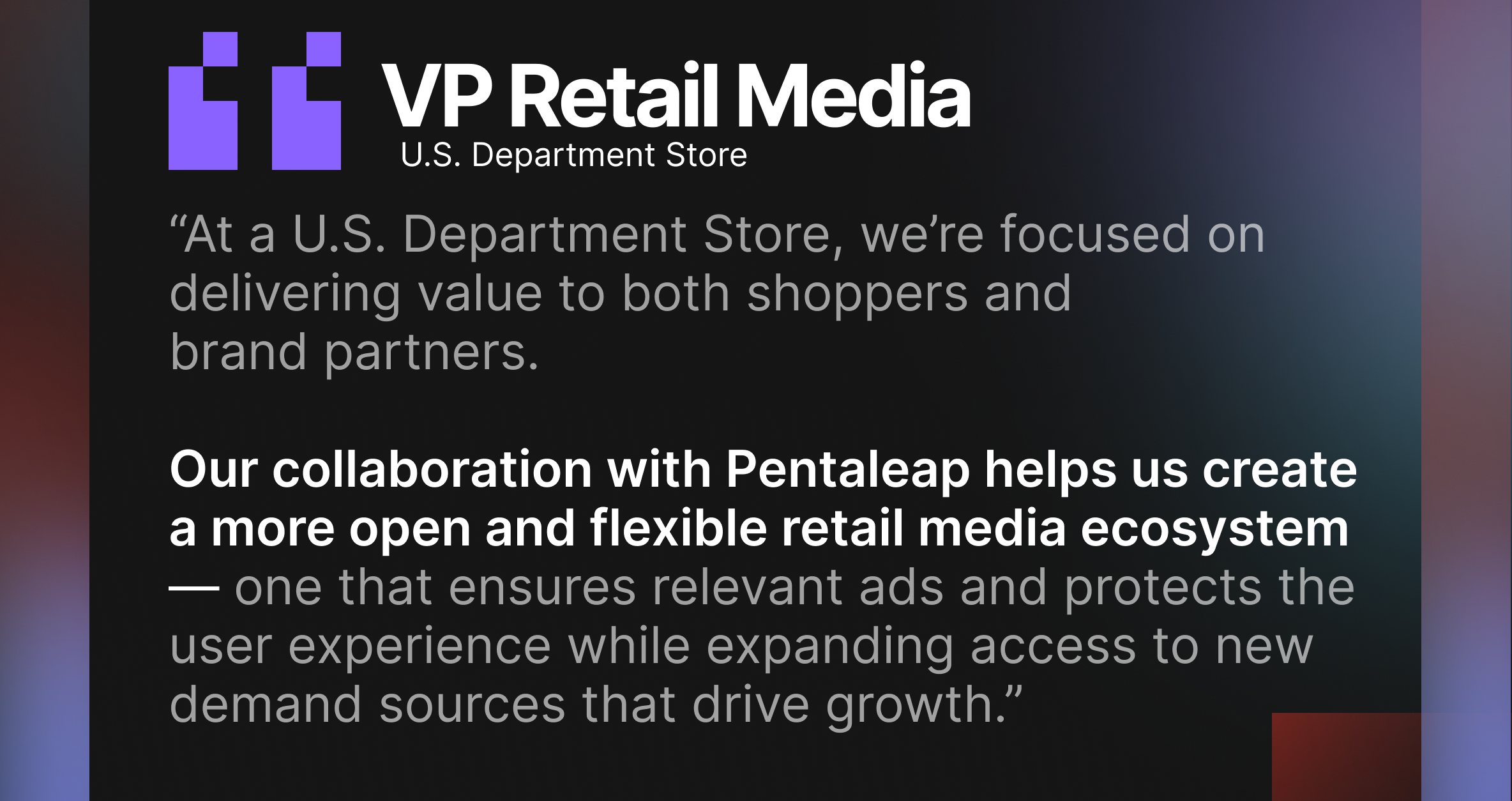
This retailer wanted to grow onsite revenue without weakening the customer experience — but had three non-negotiables: no new slots, keep relevance high in the top rows and do not disrupt the brand side (same UI, same targeting, same reports).
The approach
Keep the workflow. Add an optimization layer.
The retailer deployed Pentaleap using a low-disruption model: keep the incumbent UI as the workflow layer, add a separate optimization layer that would govern ranking and serving decisions.
What stayed the same
The non-negotiables
- No new ad slots were added.
- Promoted products had to meet the same relevance bar as the organic results they displaced.
- Brand workflow remained intact in the incumbent system: campaigns, budgets, and bids continued to be managed in the incumbent ad server UI.
What changed
Sponsored stopped living in its own lane
The shift wasn’t about adding ads. With Pentaleap’s unified ranking layer, it became about who deserved the best spots. Sponsored results had to meet the same relevance standard as the rest of the shelf. High-relevance ads moved up. Lower-relevance ads moved down.
With the same number of ads, the department store’s online shelf became more useful to shoppers, without becoming more cluttered.
Rollout
Proof before scale
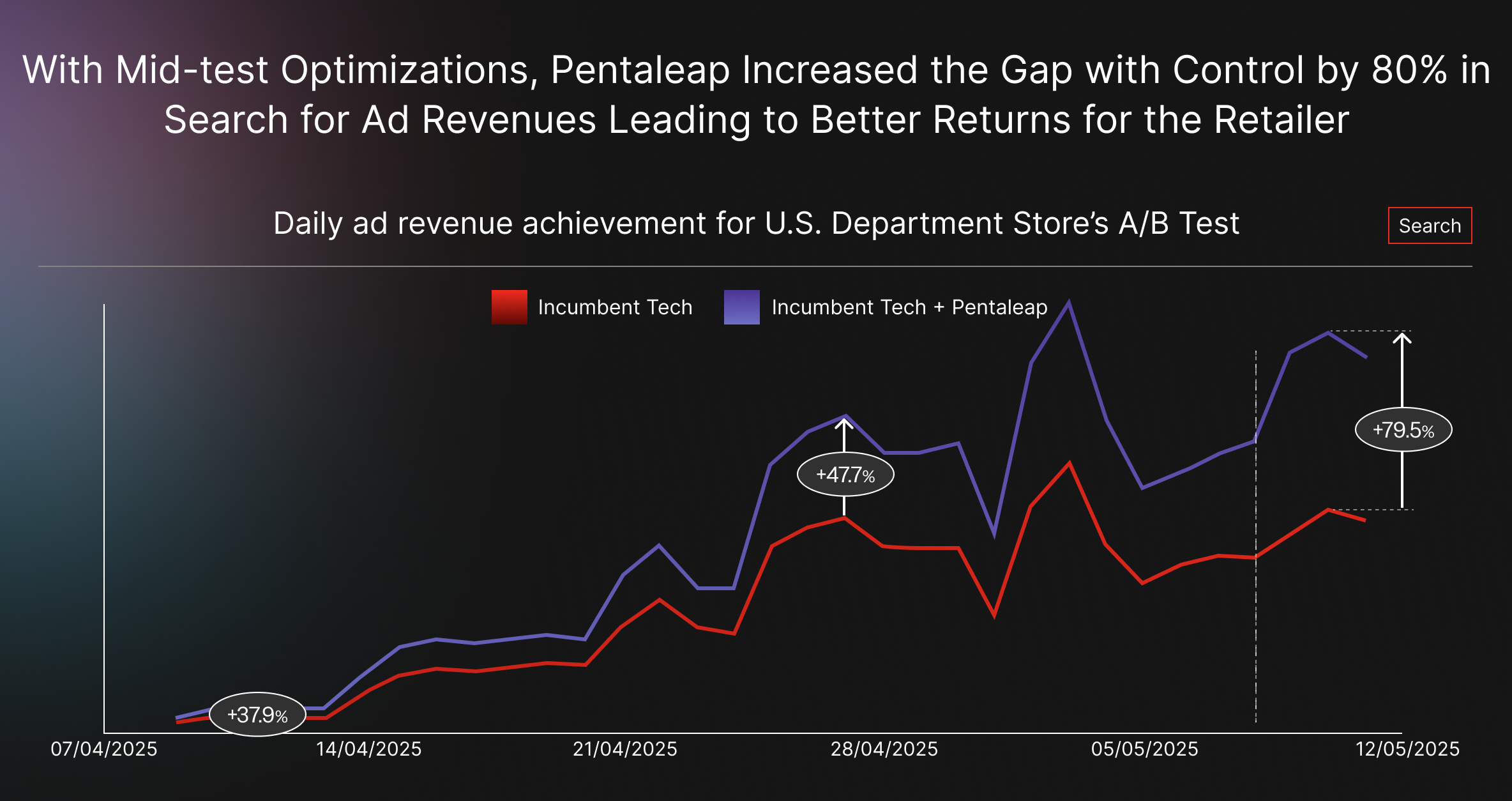
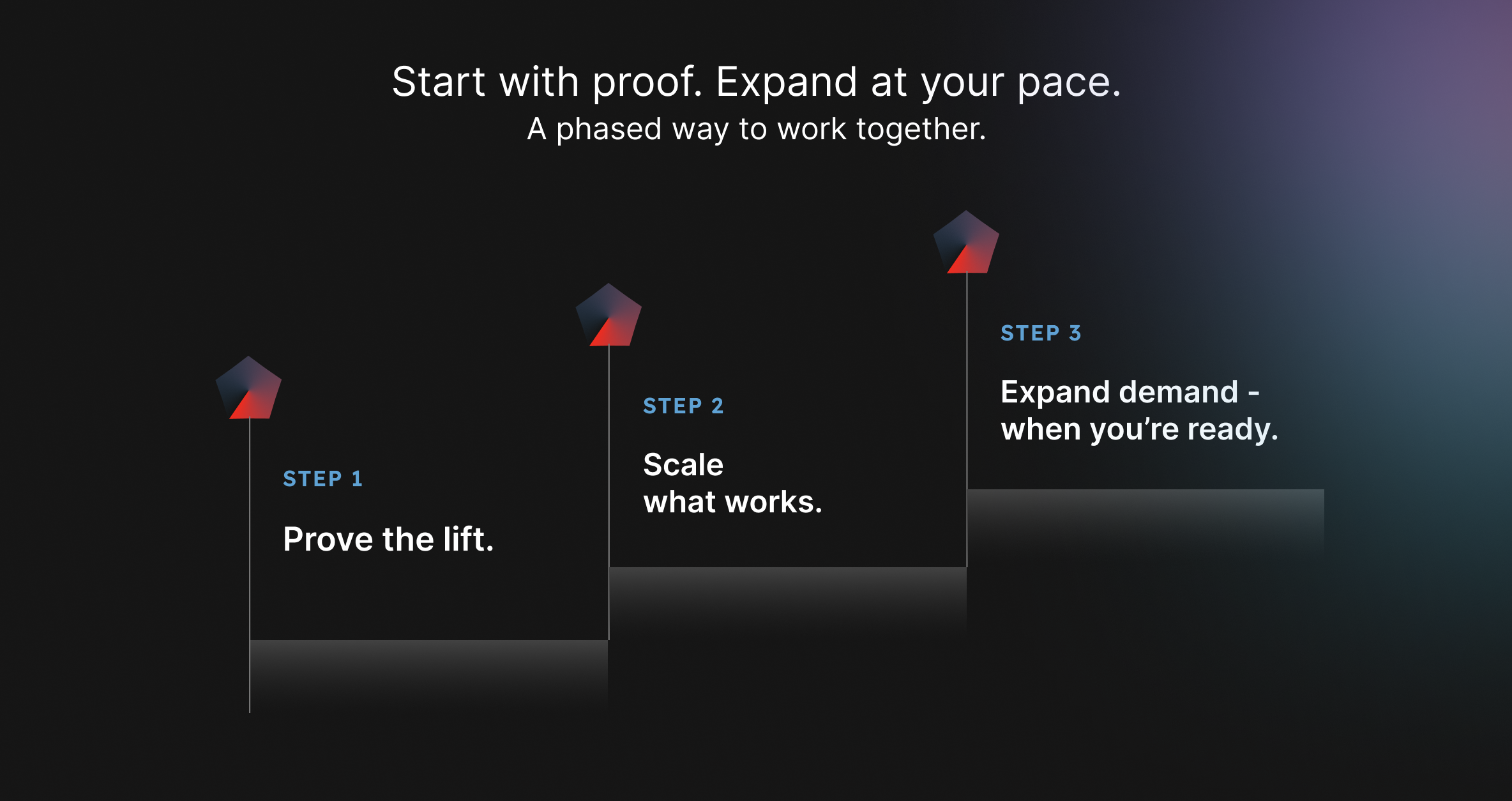
The U.S. department store approached the implementation cautiously: test with limited traffic, monitor shopper behavior and downstream metrics closely, and only expanded once conversion and engagement metrics remained strong.
1. A/B tested unified ranking on a subset of traffic to validate lift and confirm shopper KPIs held.
2. Expanded coverage across devices and placements once results stabilized, while keeping ad load constant.
3. Once unified ranking was proven, they would connect more demand sources so more bids could compete for the same placements.
Results
Validated lift (with the same ad load)
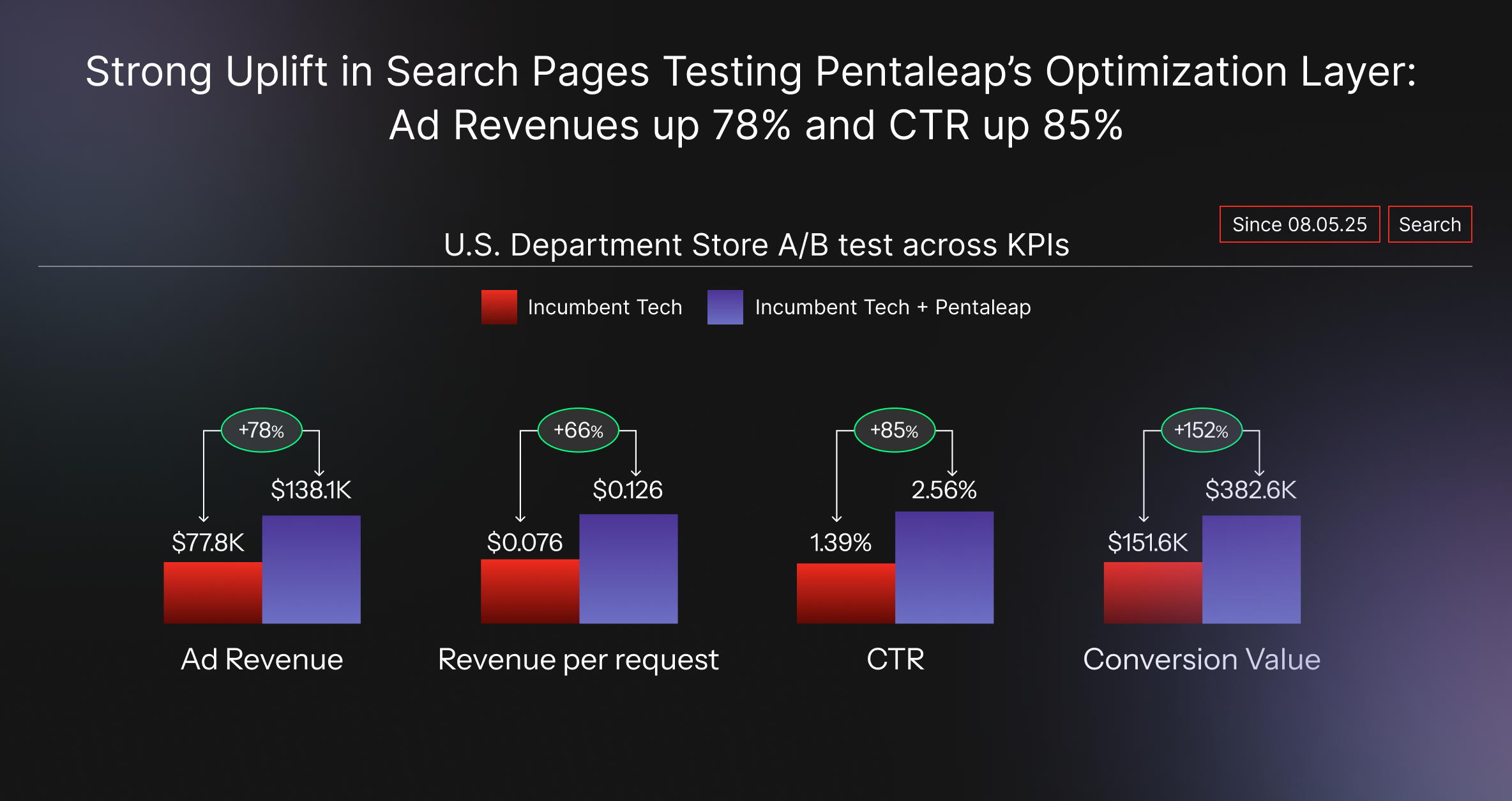
A/B test lift (initial validation):
- Ad revenue: +78%
- Revenue per request: +66%
- CTR: +85%
- Conversion value: +152%
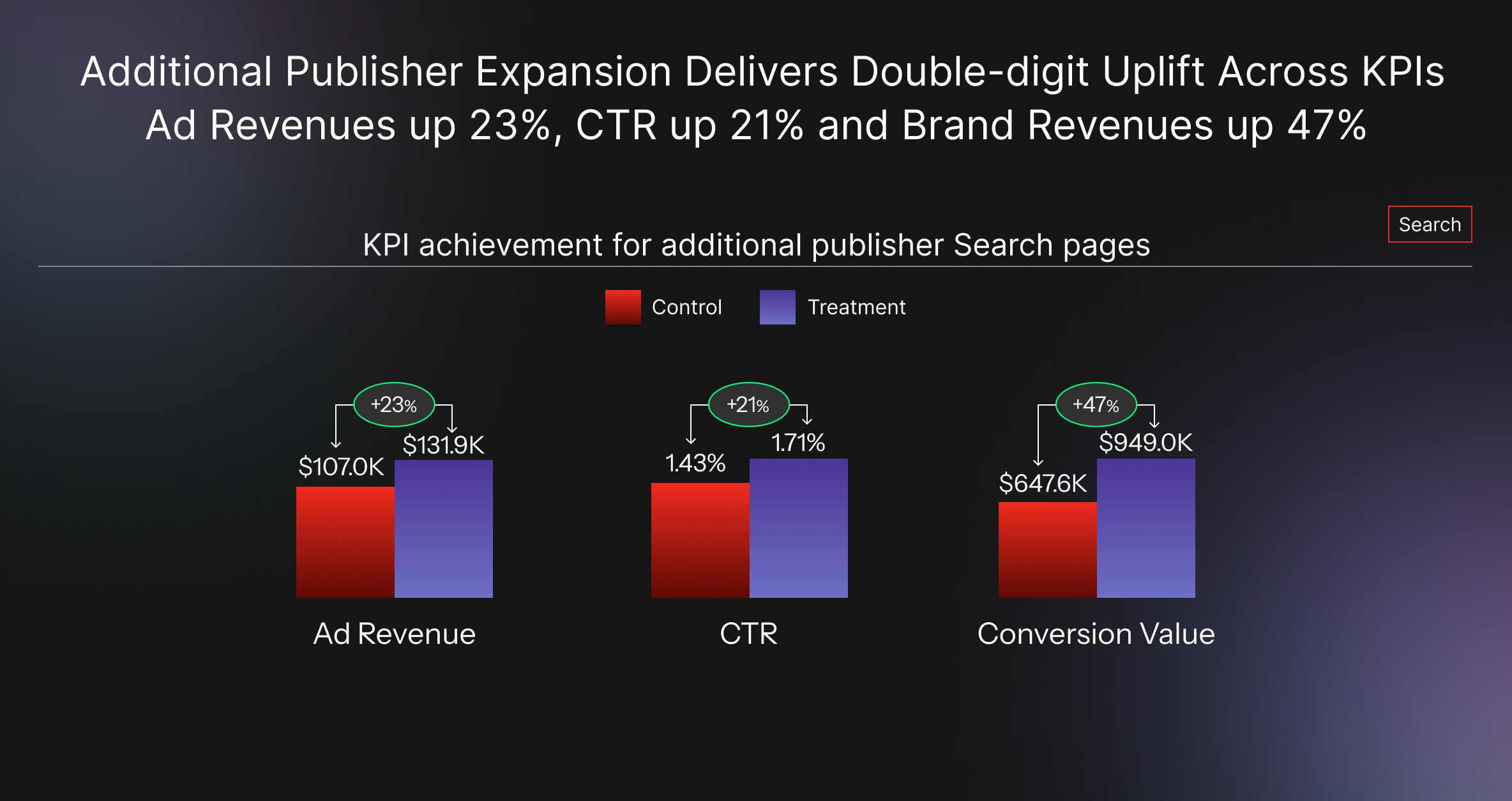
Scaled impact (after expansion across placements/devices):
- Ad revenue: +23%
- CTR: +21%
- Conversion Value: +47%
How the integration worked
Two layers: workflow up top, ranking underneath
Pentaleap was deployed as an optimization layer fully compatible with the incumbent ad server:
- The U.S. retailer’s incumbent solution remained the control plane where campaigns and bids are steered through the existing UI.
- Pentaleap handled the ad serving, using unified ranking to determine where sponsored products should appear relative to organic results.
- The retailer gained control over ranking and auction logic across Search, Browse, and PDP surfaces, without forcing a workflow change on brands.
Why it worked
Because relevance drives performance
Many onsite setups optimize sponsored placements separately from the organic grid. When those systems operate independently, the most visible positions on the page don’t always reflect the strongest matches for the shopper.
Pentaleap’s unified ranking layer aligned those decisions. The retailer increased revenue by improving which products earned premium placements — not by increasing ad load. In practice, shoppers saw sponsored products that better matched intent, and fewer mismatches in the highest-impact rows.

What came next
More competition per impression, same footprint
With ranking and performance proven, the retailer expanded demand access — without adding placements or changing the shopper experience.
Rather than relying on a single demand source, the retailer enabled multiple sources to compete for the same sponsored positions.
Pentaleap’s optimization layer made it possible to:
- Connect multiple demand sources
- Run a unified auction across them
- Increase bid density per request
- Maintain strict relevance standards
While the number of ads stayed the same, what changed was the level of competition behind each placement.
Previously, 8 sponsored slots meant 8 products returned. But with Pentaleap’s RTB demand approach, the incumbent source expanded from 8 to 24 bids per request.
And with diversified demand connected, up to 40 bids competed for the same 8 positions. In short, the auction got deeper, without adding clutter to the onsite shelf.
What's Next
Stay Ahead with Retail Radar
Subscribe for cutting-edge insight into the latest retail media developments and trends
.png)

.webp)