


How a U.S. Fashion Retailer Increased Onsite Retail Media Revenue Without Adding More Ads
Context
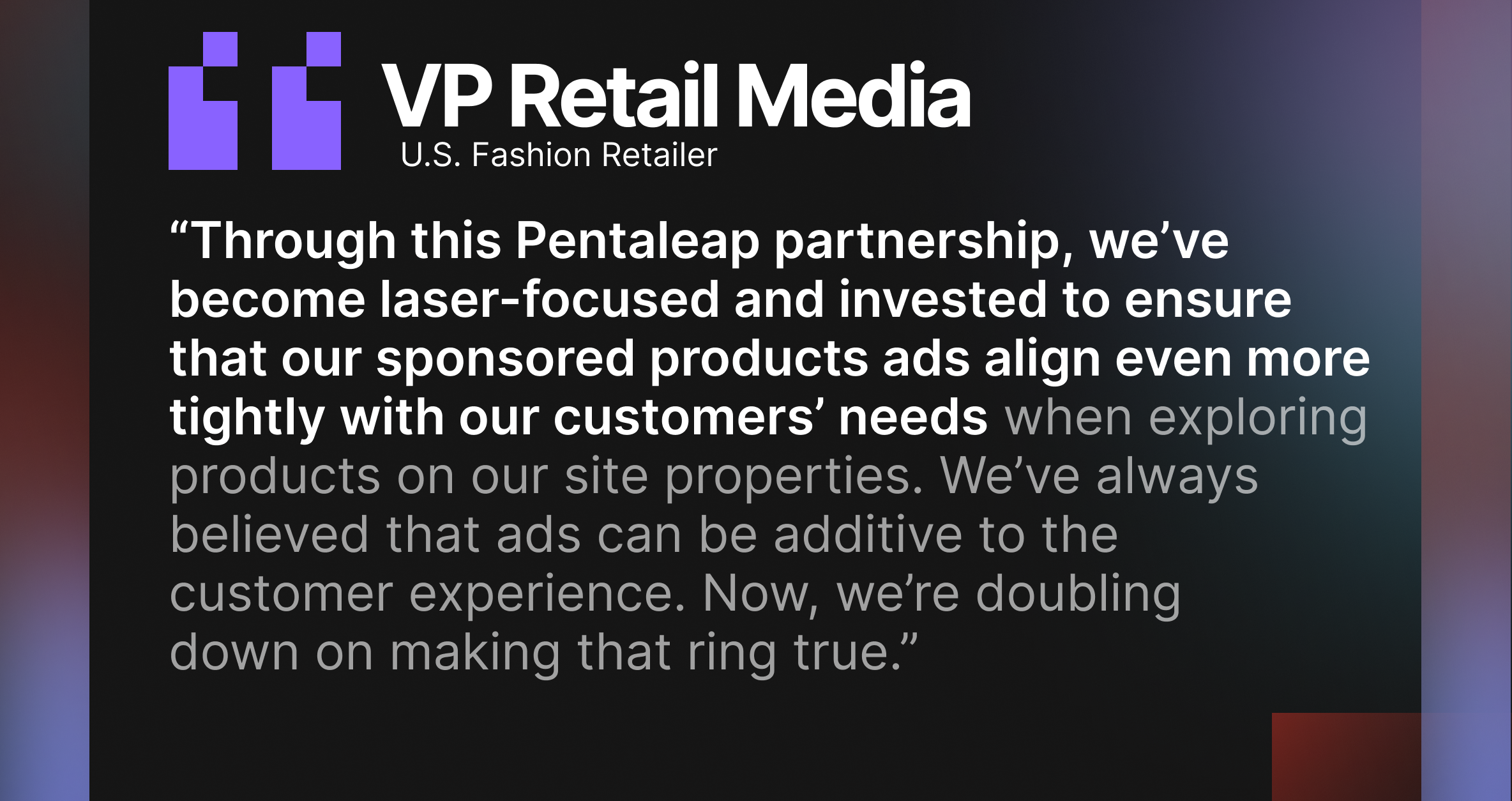
Historically, retailers ran organic and sponsored as separate systems. The result was a digital shelf that optimized for bids, not intent — and in high-consideration categories, that breaks trust fast.
A U.S. fashion retail media network wanted to grow onsite ad revenue without harming customer experience or retail performance. As a mature network, they were under pressure to scale monetization while protecting relevance and conversion.
Challenge: “If we change how ranking works, we could damage the shopping experience — or today’s revenue.”
- Sponsored products were increasingly disconnected from organic results
- Growing ad load risked hurting conversion and the shopper experience
- Sponsored products and organic ranking were handled in separate systems, forcing tradeoffs between revenue growth and retail performance
At the same time, the retailer was understandably cautious:
- A long-standing relationship with the incumbent supported a significant portion of current revenue
- High reliance made disruption feel risky
- Previous large integrations had introduced operational and commercial risk
- There was a strong belief that touching ranking could negatively impact both customer experience and existing revenue streams
Solution: A phased way to work together: Start with proof. Expand at your pace
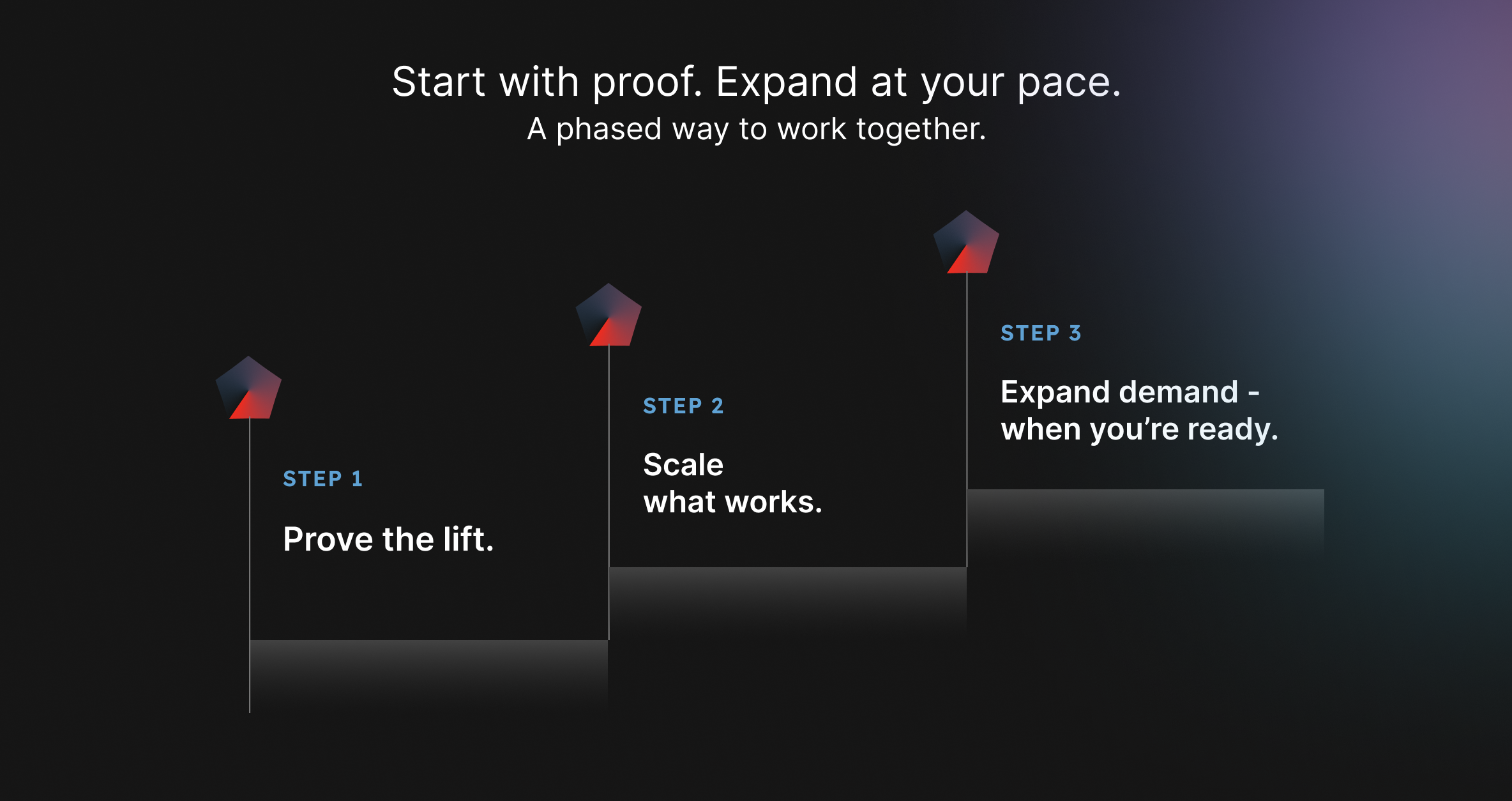
STEP 1 — Prove the Lift with a Unified Ranking A/B test [May 2025]
Goal: Optimize relevancy and yield without risk.
Instead of ripping and replacing their entire stack, the retailer ran a controlled A/B test using Pentaleap’ optimization layer alongside their existing setup.
Pentaleap’s unified ranking layer:
- Integrated easily with existing organic and sponsored systems
- Unified paid and organic ranking in one decision layer
- Prioritized the most relevant ads in high-visibility positions
- Protected the shopper experience by placing lower-relevance ads further down the grid
This allowed the retailer to test unified ranking safely, see results before committing, and keep full control over the rollout.
Test setup
- Traffic split evenly between control and treatment
- Initially, a small percentage of traffic routed through Pentaleap
- Mobile: max 4 ads
- Desktop: max 8 ads
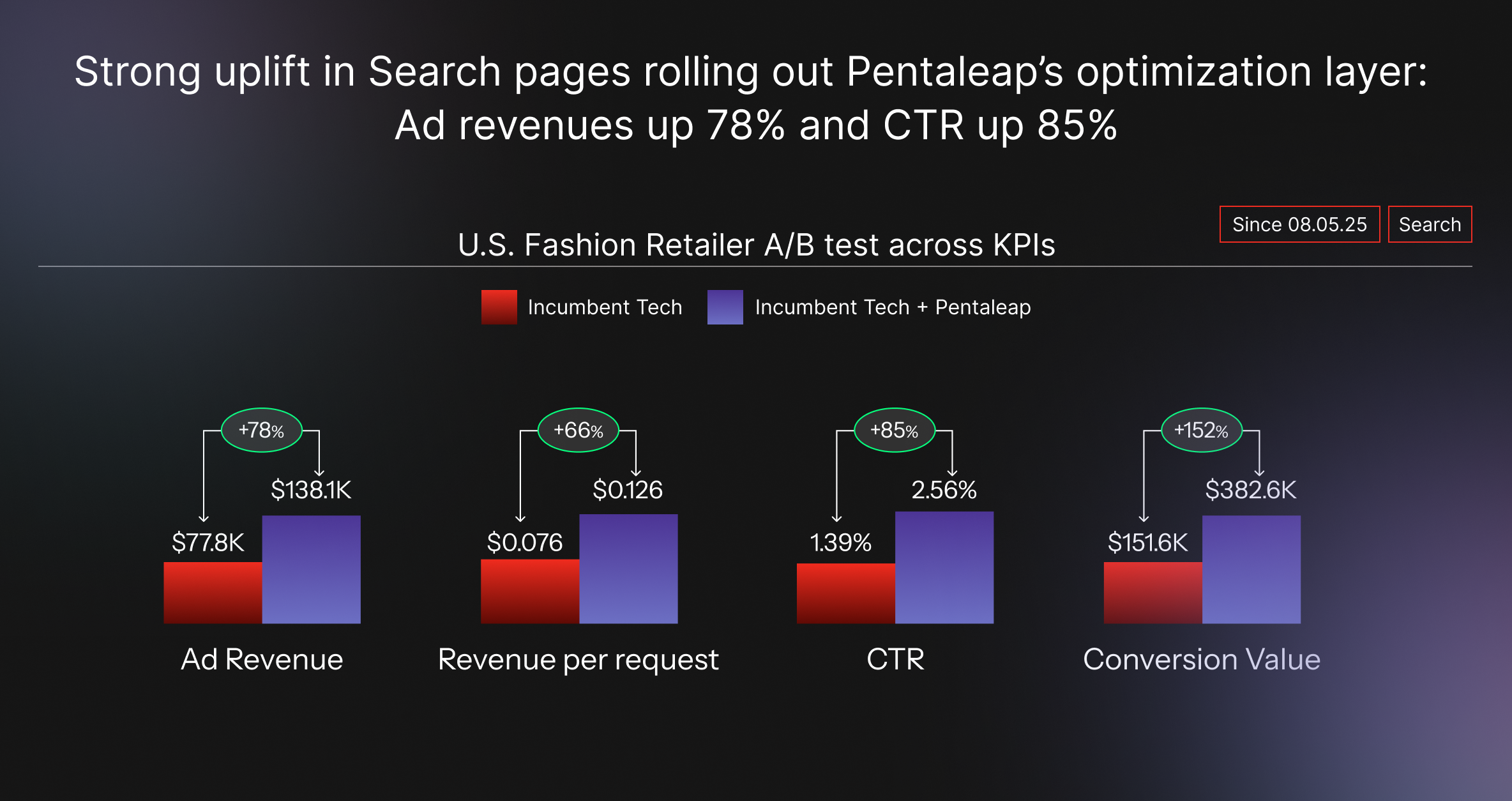
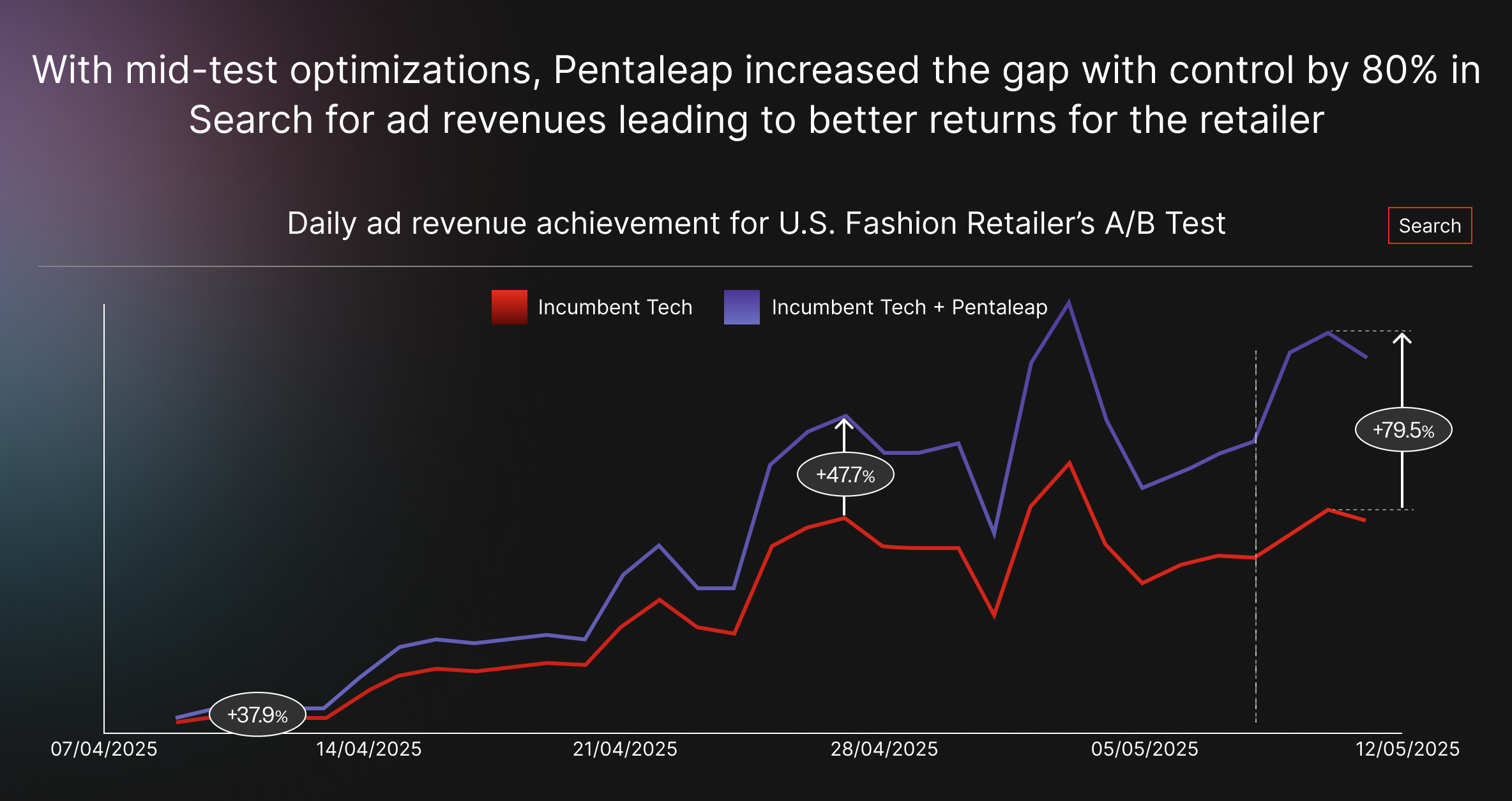
What this proved:
The retailer improved ad performance without harming the retail experience — and without replacing existing systems.
Proof first. Risk managed.
STEP 2 — Scale What Works [June-August 2025]
Goal: Expand unified ranking safely across environments and publishers
After the initial test validated performance, the retailer scaled in two clear phases.
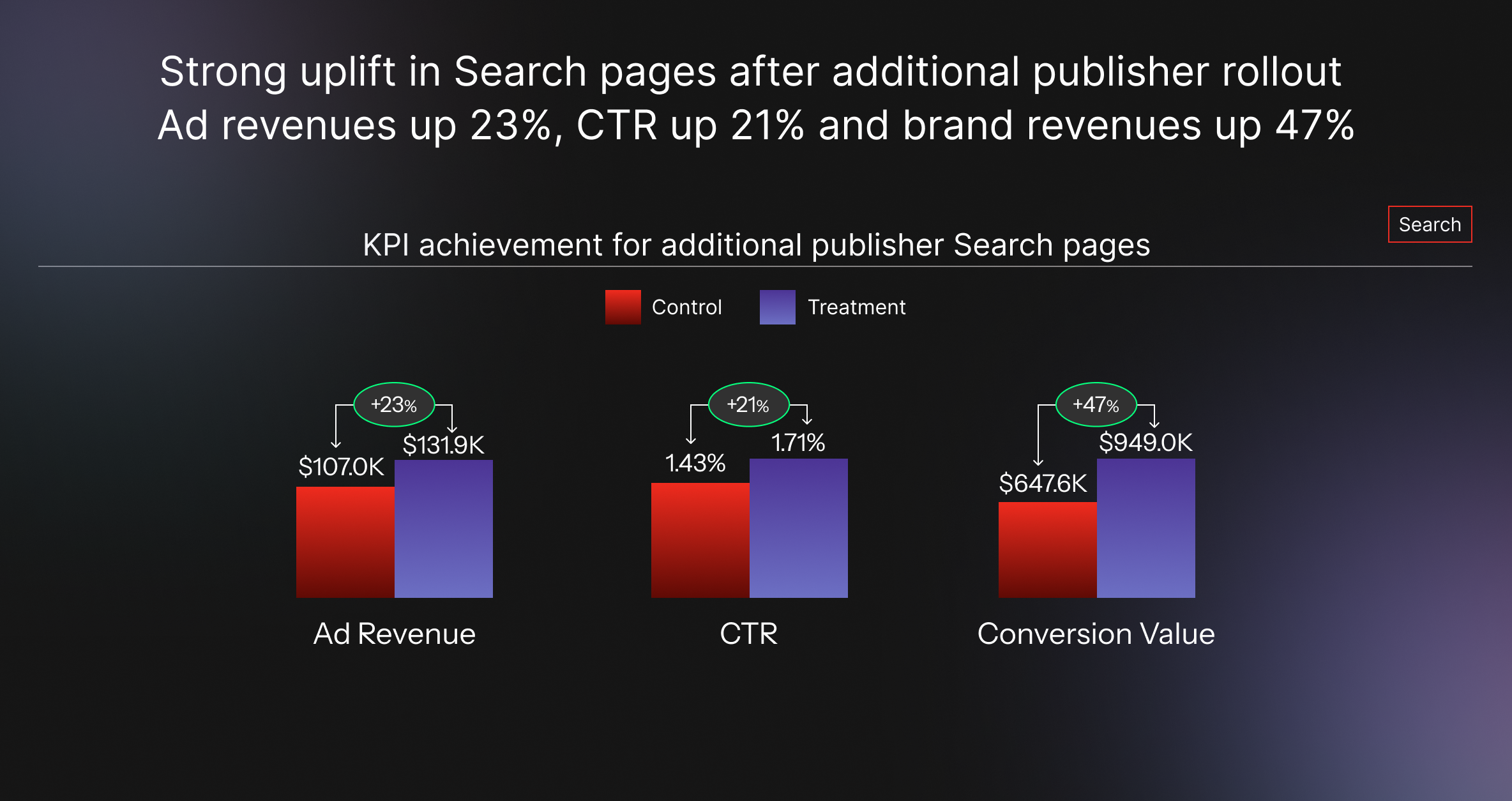
Phase 1 — Validate Across Publishers
Pentaleap was tested on an additional publisher’s search pages to confirm results held across inventory. Once the test was declared a win [results below], the retailer moved to phase two of the rollout.
Phase 2 — Expand Across Devices & Placements
Unified ranking was then extended across Search, Browse, and PDP placements on the following properties:
- App (both brands)
- Mobile web
- Tablet
Importantly, no new ad slots were added.
What Actually Changed
Under the incumbent setup, each ad request mostly returned just enough ads to fill the available slots. There wasn’t much real choice — just “fill what’s there.”
With Pentaleap, that shifted. Instead of simply filling positions, the retailer created real competition for each one — choosing the best option for every impression, not just the available one.
- Instead of showing whatever was available, more relevant ads competed for each position
- Additional demand sources increased bid competition
- Unified ranking selected the highest-margin, most relevant outcome
Incremental Impact vs. Desktop-Only Setup
Once relevance was fixed, scale was no longer a gamble — it was a controlled lever. Revenue increased because competition improved and the retailer owned the rules of the auction. Traffic volumes routed through the Pentaleap ad server soared as a result:
- Impressions: +236%
- Clicks: +357%
- Ad Revenue: +364%
STEP 3 — Expand Demand When Ready with RTB (October 2025)
Goal: Diversify demand without losing control.
With ranking and performance proven, the retailer began expanding to multi-source demand.
Pentaleap’s optimization layer enables them to:
- Connect multiple demand sources
- Run a unified auction to pick the most relevant ads
- Maintain customer experience while dramatically improving fill rate
Business Impact: More Competition, Better Decisions, Full Ownership
With 100% of traffic running through Pentaleap’s unified ranking layer, the U.S. Fashion Retailer fundamentally changed how ad decisions were made.
Previously, each page simply took as many ads as there were slots. With 8 sponsored positions, the incumbent supplied 8 products — limited choice and no real competition.
With Pentaleap in place, the model shifted:
- Incumbent demand expanded from 8 to 24 bids per request
- With diversified demand connected, up to 40 bids compete for the same 8 positions
- The number of ads stayed the same
Instead of accepting what its legacy source provided, the retailer now:
- Owns the ranking logic
- Owns the auction rules
- Evaluates more options
- Selects the highest-margin, most relevant outcome
The Bottom line
By owning ranking logic and auction rules, the retailer improved ad performance while protecting retail performance — proving they don’t have to trade customer experience for revenue.
Stronger relevance
- Opened the door to expanding scope of advertising
- No disruption to the shopping experience
Higher ad revenue
- More clicks
- Higher CPCs
- More competitive auctions
Better brand outcomes
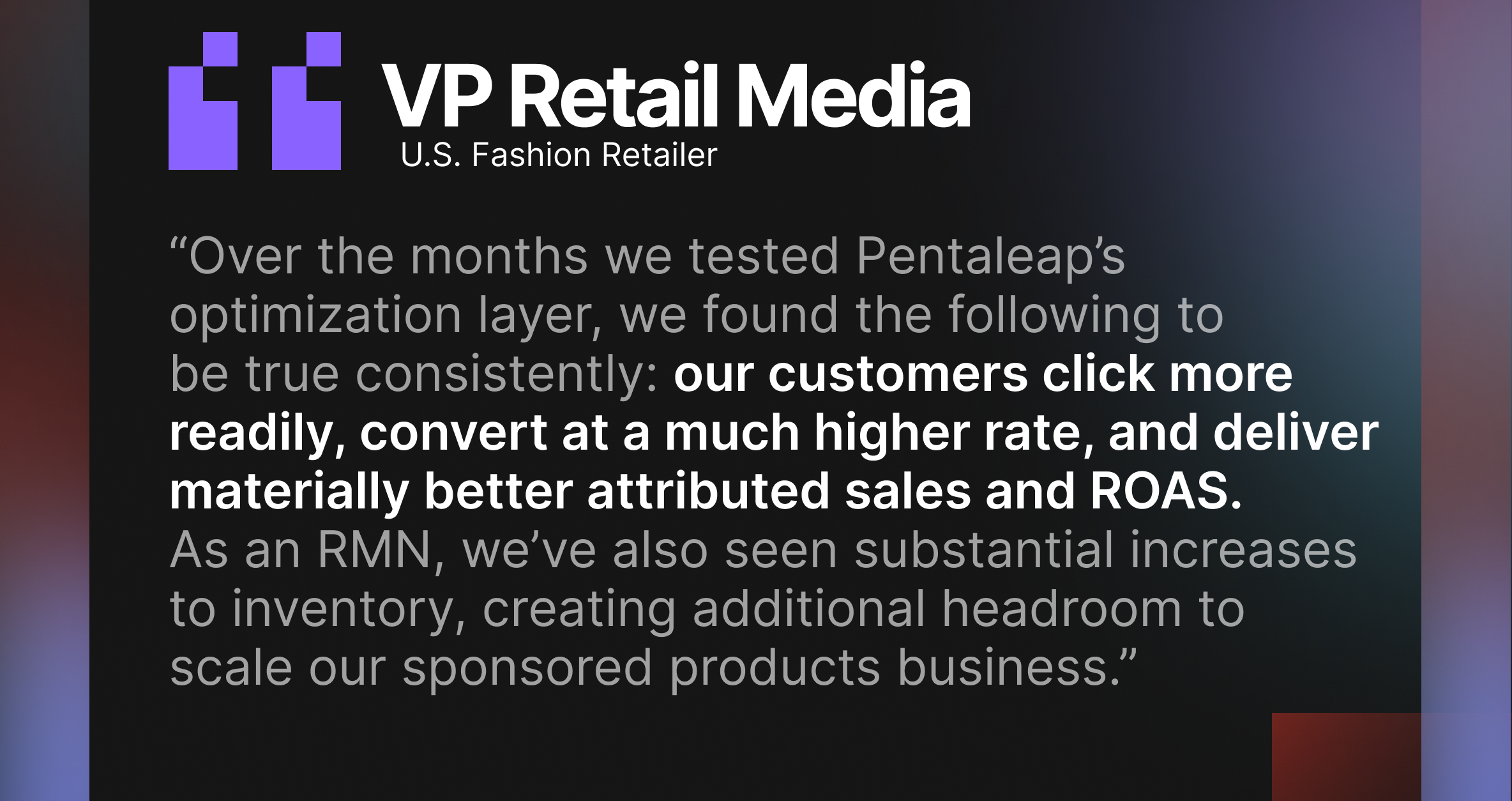
- Higher conversion rates
- Higher conversion value
- Stronger ROAS
Stay Ahead with Retail Radar
Subscribe for cutting-edge insight into the latest retail media developments and trends
.png)

.webp)

